
Exploring the Enigmatic Camellia Sinensis: Unraveling the Mysteries of Tea
Introduction
In the world of beverages, few hold as much allure, tradition, and cultural significance as tea. Behind every invigorating cup lies the story of the Camellia sinensis plant, a botanical marvel cherished for millennia. From the misty mountains of China to the sprawling estates of India and beyond, the journey of this remarkable plant has shaped cultures, economies, and palates worldwide.
Origins and Distribution
The Camellia sinensis plant is native to East and Southeast Asia, where it thrives in diverse climates ranging from tropical to subtropical regions. While its precise origins are shrouded in legend, historical evidence suggests that tea cultivation dates back over 2,000 years in China. Today, tea is cultivated across the globe, with major producing regions including China, India, Japan, Sri Lanka, and Kenya.
Ideal Climate Zones
The tea plant is highly adaptable but thrives in specific climate zones characterized by moderate temperatures, ample rainfall, and well-drained soil. Generally, it prefers regions with temperatures ranging from 10°C to 30°C (50°F to 86°F) and an annual rainfall of 1500 to 2500 millimeters. Altitude also plays a crucial role, with higher elevations often producing teas prized for their complexity and flavor.
Flowers and Seeds
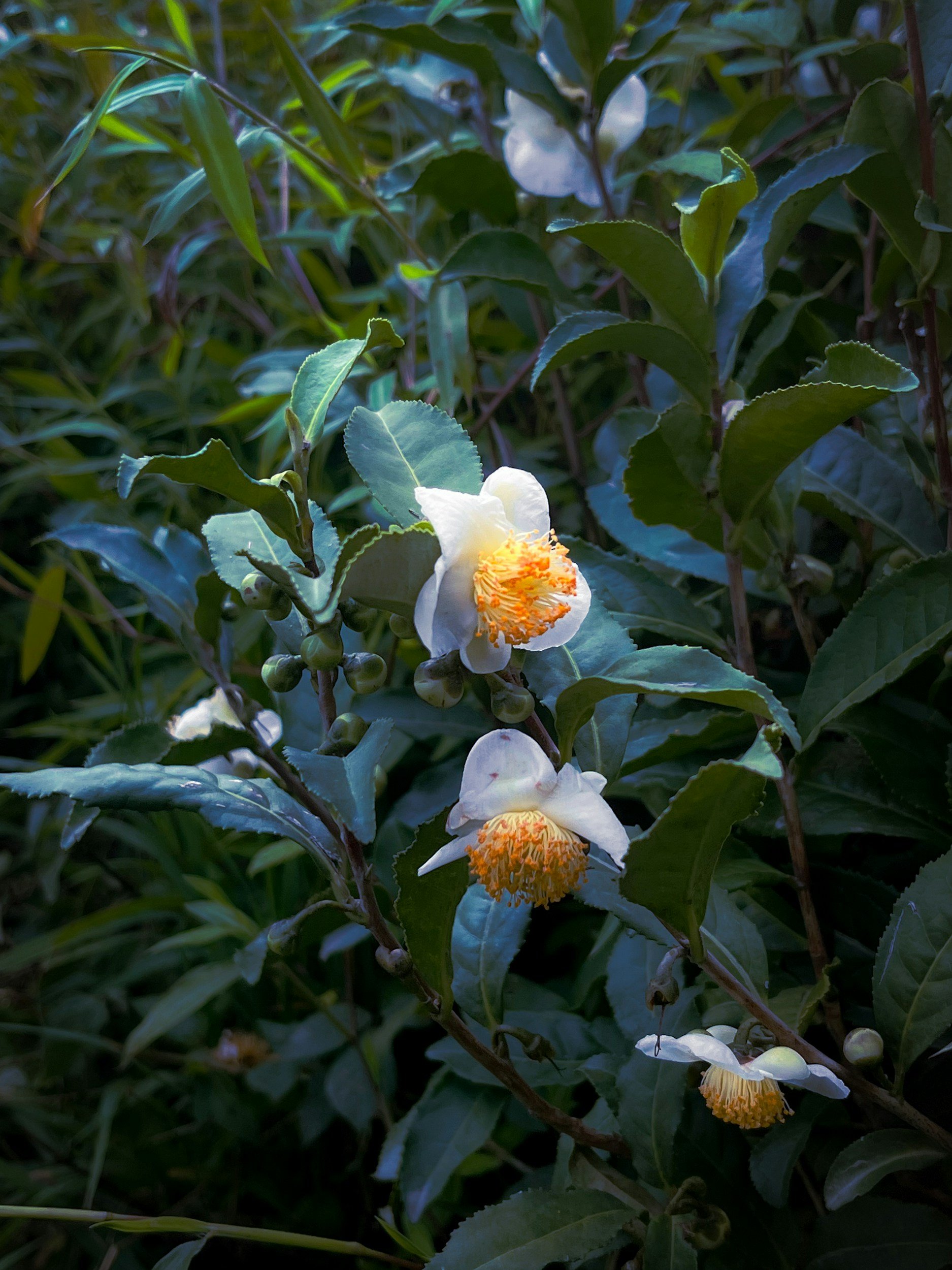
While the allure of tea lies primarily in its leaves, the Camellia sinensis plant produces delicate flowers that are a sight to behold. Typically small and white, these blossoms adorn the plant during the growing season, adding a touch of elegance to tea gardens. Following pollination, the plant develops seed pods containing seeds that can be used for propagation, although most tea cultivation is done through cuttings to maintain desired traits.
Leaf Texture and Varieties
The leaves of the Camellia sinensis plant are perhaps its most captivating feature, varying in size, shape, and texture depending on the cultivar and growing conditions. Broadly categorized into two main varieties, Camellia sinensis var. sinensis and Camellia sinensis var. assamica, the former is known for its smaller leaves and is predominantly cultivated in China and Japan, yielding delicate green and white teas. In contrast, the latter, with its larger leaves, is favored in regions like India and Sri Lanka, giving rise to robust black and oolong teas.
Leaf texture ranges from smooth and glossy to slightly serrated, with variations in color from deep emerald to rich coppery hues. The texture and appearance of tea leaves are influenced by factors such as climate, soil composition, and processing techniques, each contributing to the unique character of the final brew.
Conclusion
The Camellia sinensis plant stands as a testament to the intersection of nature, culture, and craftsmanship. From its humble origins in ancient China to its global prominence today, tea continues to captivate and inspire millions around the world. As we sip our favorite brews, let us pause to appreciate the remarkable journey of this botanical treasure and the myriad flavors and aromas it brings to our cups.
Cheers,
Amanda
3 of Cups Curator